OCTOBER 2019
Preventing charity fraud
Everyone has a part to play in the fight against charity fraud – trustees, employees, beneficiaries and the general public. Every pound lost to fraud is a pound that cannot be spent on charitable causes. The public and other donors give money to enable charities to thrive and achieve their aims. Public trust and confidence in the sector relies upon good governance in charities, and tackling fraud is a vital component.
Relatively little is known about the nature and extent of charity fraud, resulting in vulnerabilities that fraudsters can exploit. The Charity Commission for England and Wales is committed to tackling these threats by giving charities the understanding and tools they need to succeed in fighting fraud.
Charities in England spend nearly
£80BN
EVERY YEAR
Over
2/3
of charities think fraud is a major risk
But less than
9%
of charities have a fraud awareness training programme
Just
30%
of charities have a whistleblowing policy
Research insights
In 2009 the Fraud Advisory Panel (supported by the Charity Commission) published Fraud in the charitable sector – at that time the most extensive charity fraud study undertaken in the UK. Ten years on, the Commission (partnered by the Fraud Advisory Panel) repeated and extended the scope of that survey, contacting a representative sample of 15,000 registered charities across England and Wales. With a 22% response rate, this is the largest ever analysis of fraud committed against UK charities.
Trends in tackling charity fraud
The results are generally encouraging, with some improvements made over the last 10 years. However, significant fraud threats and vulnerabilities persist, and many charities are yet to adopt the good practice required to sufficiently protect themselves from fraud.
- In the next two years, for every 25 charities in England & Wales, one will suffer fraud. Don’t make it yours.
- Charities who have suffered fraud typically go on to revise financial and internal controls, or their physical security. Make these changes now before you’re affected.
- The biggest impact of fraud is reputational damage. Consider what this could do to your charity.
- More than eight in ten frauds are identified as a result of financial controls at the charity, by audit or whistleblowing. Rigorously applying basic controls can make the biggest difference.
Scale of fraud
Charities in England and Wales spend nearly £80bn every year – a tempting target for fraudsters. Although there is no universally accepted estimate of the scale of charity fraud, research suggests the cost to the sector is likely to be hundreds of millions, potentially billions, of pounds each year. The strong ethos of trust common to charities can make them more susceptible to fraud than similar size public or private sector organisations.
This report summarises charities’ progress in tackling fraud (2009 results are highlighted in brackets), identifies where further action should be taken, signposts available guidance, and highlights the good practice that’s been adopted by those charities keen to take a pro-active and transparent approach to fighting fraud. Together, we can keep charity fraud out.
Perception of fraud risk
- Over two thirds of charities (69%) think fraud is a major risk to the charity sector (51% in 2009)
- A third (33%) think fraud is a greater risk to the charity sector than other sectors (25% in 2009)
- In general, larger charities (particularly those that have suffered fraud) are more likely to acknowledge the risk of fraud.
Conclusion
Charities are increasingly aware of the risk of fraud, with larger charities the most likely to accept the threats faced. Acknowledging the risk of fraud is the first step towards better fraud prevention.
Action
CHARITIES SHOULD RECOGNISE THE RISK OF FRAUD AND UNDERSTAND THE HARM IT CAN CAUSE TO THEIR VALUABLE FUNDS AND REPUTATION.
Fraud risk management
- 85% of charities think they’re doing everything they can to prevent fraud, but almost half don’t actually have any good-practice protections in place
- Less than a third (30%) of charities have a whistleblowing policy (18% in 2009)
- Less than a tenth (9%) of charities have a fraud awareness training programme (4% in 2009)
- Charities believe they’re vulnerable to fraud because of a lack of fraud awareness training (28%), an over-reliance on goodwill and trust (26%) and/or excessive trust in one or more individuals (22%)1
- But nearly half (48%) believe they’re not vulnerable to any of the most common fraud enablers
- Charities believe they’re most vulnerable to internal fraud (21%), external fraud (20%), fundraising fraud (14%) and beneficiaries fraud (8%)2
- But over a third (34%) think they’re not vulnerable to any of the most common types of charity fraud.
[1] Charities could select more than one vulnerability.
[2] Charities could select up to three fraud types.
Conclusion
Overall, fraud awareness remains low. It is concerning that many charities believe they’re not at risk – even those with the best counter fraud defences are likely to fall victim at some point. Whistleblowing arrangements are more widespread across charities than ten years ago, but remain far from universal.
Action
CHARITIES SHOULD RECOGNISE THEY CAN BE VULNERABLE TO DIFFERENT FRAUD TYPES, STRENGTHEN WHISTLEBLOWING ARRANGEMENTS AND INTRODUCE FRAUD AWARENESS RAISING PROGRAMMES.
26%
of charities believe they’re vulnerable to fraud because of an over-reliance on goodwill and trust
Frequency of charity fraud
(the following analysis relates only to charities that have suffered a fraud in the last 2 years)
- 4% of charities have suffered at least one fraud in the past two years (7% in 2009), with large charities far more likely to have been victims
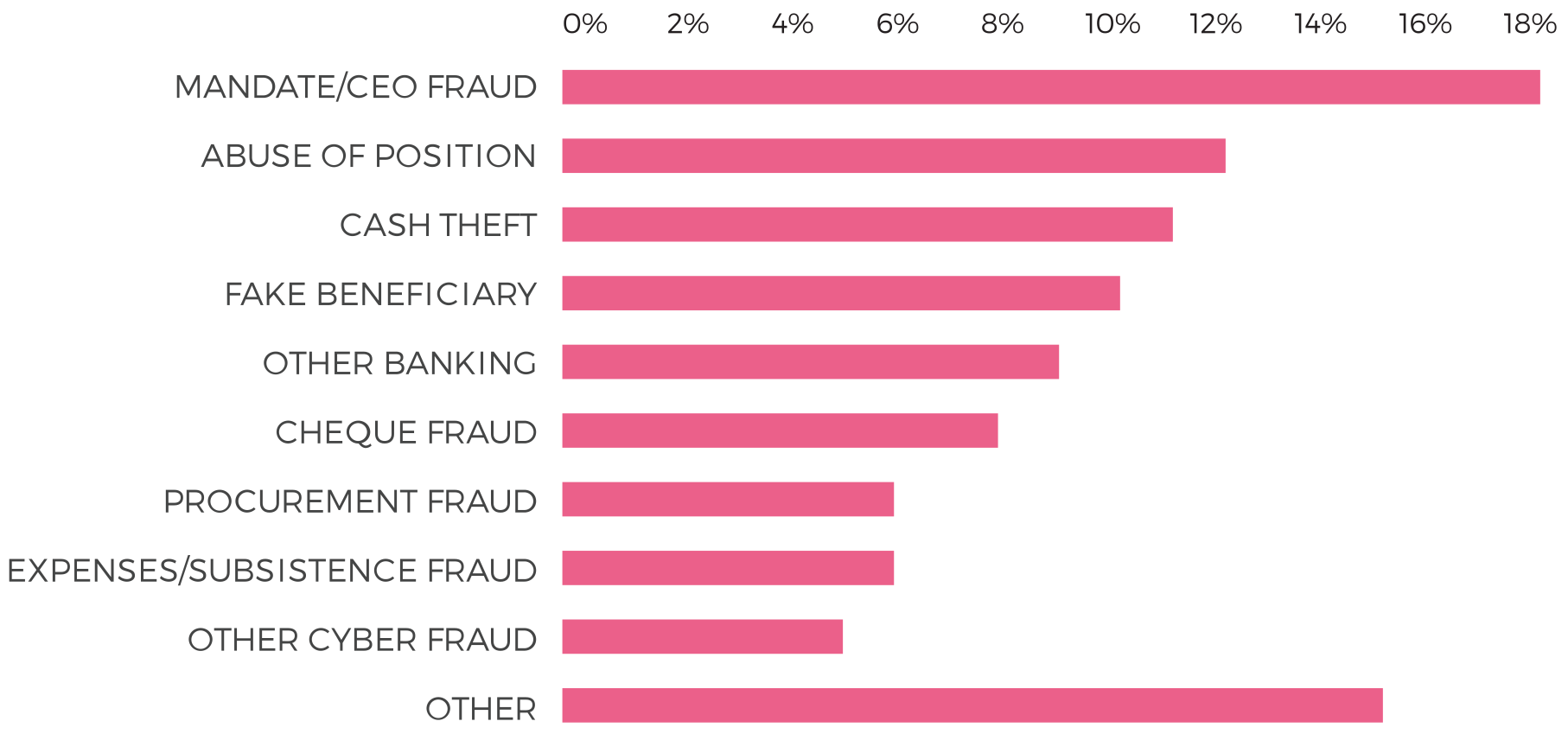
- Mandate/Chief Executive (CEO) fraud (18%) and fraud relating to abuse of position (12%) were the most common types of fraud suffered.
Conclusion
The decline in the number of charities reporting at least one fraud during the last two years runs contrary to national trends. This suggests that charities still have much to do to better identify and report fraud. Mandate/Chief Executive (CEO) fraud is the most common type of fraud targeted against charities. This is a type of social engineering, involving impersonation of legitimate organisations the charity deals with, or senior staff of the charity itself, usually conducted via hoax emails.
Action
CHARITIES SHOULD IMPROVE THEIR KNOWLEDGE OF THE MOST COMMON FRAUD TYPES AND ENSURE ADEQUATE REPORTING ARRANGEMENTS ARE IN PLACE.
Two
THIRDS
of frauds were picked up by financial controls at the charity or by internal or external audit
How charity fraud happens
(the following analysis relates only to charities that have suffered a fraud in the last 2 years)
- Over half of charities (53%) knew who committed the fraud (49% in 2009)
- Where the identity of the fraudster was known: 29% were paid members of staff (40% in 2009), 18% were volunteers (11% in 2009), 13% were beneficiaries (5% in 2009) and 10% were trustees (3% in 2009). Only 14% of fraudsters had no previous connection to the charity (11% in 2009)
- Nearly two thirds (60%) of frauds occurred over a six month period (59% in 2009) and only 5% last over two years
- 66% of frauds are identified as a result of financial controls at the charity or by internal or external audit (46% in 2009), 17% by whistleblowing (9% in 2009), 9% by accident (9% in 2009), 6% by data matching and only 1% by bank notification (18% in 2009)
- 59% of frauds cost less than £1,000 (49% in 2009).
Conclusion
While fraud committed by staff has fallen significantly, fraud by trustees and volunteers has doubled. Most frauds are small in value and occur over a relatively short timeframe. Application of financial controls and audit remain core to timely identification; so too does whistleblowing. In short, it is the actions of the charity, its staff and volunteers that is critical to effective fraud prevention.
Action
CHARITIES SHOULD SATISFY THEMSELVES THAT FRAUD PREVENTION CONTROLS ARE IN PLACE AND OPERATING EFFECTIVELY. TRUSTEES, STAFF AND VOLUNTEERS ALL NEED TO UNDERSTAND HOW TO IDENTIFY AND REPORT FRAUD.
Frequency of common charity frauds
(the following analysis relates only to charities that have suffered a fraud in the last 2 years)
59%
of frauds cost less than £1000
Over
HALF
knew who committed the fraud
The impact of fraud
(the following analysis relates only to char
- Over two thirds (68%) of charities stated the fraud had some form of adverse impact on the charity (27% in 2009)
- 24% said the fraud resulted in reputational damage (12% in 2009), 14% loss of staff and volunteers (4% in 2009), and 13% in reduced charitable activities (7% in 2009)
- Only 6% noted adverse publicity following the fraud (8% in 2009).
Conclusion
Today fraud has a far greater detrimental impact on charities than ten years ago, especially on their reputation.
Action
TO BOOST RESILIENCE, CHARITIES SHOULD FOCUS ON PREVENTING FRAUD RATHER THAN WAITING UNTIL AFTER THEY’VE FALLEN VICTIM.
Response to fraud
(the following analysis relates only to charities that have suffered a fraud in the last 2 years)
- 89% of cases were reported to the Board (83% in 2009)
- 42% reported the fraud to the police (51% in 2009) and 29% to the Charity Commission (10% in 2009)
- A third (33%) did not report the fraud to any external organisation (24% in 2009)
- Over half (58%) recovered some or all of the funds lost to the fraud (51% in 2009)
- Just under half (47%) think their charity contributed in some way to the fraud occurring (53% in 2009), with nearly a third (30%) stating that their charity was too trusting (31% in 2009)
- Nearly three quarters (73%) of charities changed their procedures or enhanced internal controls to avoid future frauds (66% in 2009).
Conclusion
Reporting to external agencies remains low, although reporting to the Charity Commission has improved. Excessive trust is the main contributory factor that allows fraud to occur, suggesting more needs to be done to embed a culture of scrutiny and appropriate challenge. It is encouraging that although the majority of charities did not believe they contributed to the fraud occurring, nearly three quarters still changed their counter-fraud arrangements as a result.
Action
CHARITIES SHOULD REVIEW THEIR FINANCIAL CONTROLS ON A REGULAR BASIS. EXCESSIVE RELIANCE ON TRUST AND GOODWILL CAN INCREASE FRAUD RISK, SO ALTERNATIVE PREVENTION AND DETECTION ARRANGEMENTS SHOULD BE PUT IN PLACE.
68%
stated the fraud had some form of adverse impact on the charity
47%
think their charity contributed in some way to the fraud occurring
30%
stated that their charity was too trusting
24%
said the fraud resulted in reputational damage
Over
HALF
recovered some or all of the funds lost to the fraud
42%
reported the fraud to the police
89%
of cases were reported to the Board
33%
did not report the fraud to any external organisation
Taking action
Public trust and confidence relies upon charities taking proportionate steps to protect themselves from fraud and financial abuse. All charities, regardless of size and type, are encouraged to demonstrate that commitment by adopting Tackling Charity Fraud – Eight Guiding Principles.
Eight principles of good counter-fraud practice
- FRAUD WILL ALWAYS HAPPEN – BEING A CHARITY IS NO DEFENCE
Even the best-prepared organisations cannot prevent all fraud. Charities are no less likely to be targeted than organisations in the private or public sector. Fraudsters don’t give a free pass to charitable activities. - FRAUD THREATS CHANGE CONSTANTLY
Fraud evolves continually, and faster, thanks to digital technology. Charities need to be alert, agile and able to adapt their defences quickly and appropriately. - PREVENTION IS (FAR) BETTER THAN CURE
Financial loss and reputational damage can be reduced by effective prevention. It’s far more cost-effective to prevent fraud than to investigate it and remedy the damage done. - TRUST IS EXPLOITED BY FRAUDSTERS
Charities rely on trust and goodwill, which fraudsters try to exploit. A strong counter-fraud culture should be developed to encourage the robust use of fraud prevention controls and a willingness to challenge unusual activities and behaviour. - DISCOVERING FRAUD IS A GOOD THING
The first step in fighting fraud is to find it. This requires charities to talk openly and honestly about fraud. When charities don’t do this the only people who benefit are the fraudsters themselves. - REPORT EVERY INDIVIDUAL FRAUD
The timely reporting of fraud to police, regulators and other agencies is fundamental to strengthening the resilience of individual charities and the sector as a whole. - ANTI-FRAUD RESPONSES SHOULD BE PROPORTIONATE TO THE CHARITY’S SIZE, ACTIVITIES AND FRAUD RISKS
The vital first step in fighting fraud is to implement robust financial controls and get everyone in the charity to sign up to them. - FIGHTING FRAUD IS A JOB FOR EVERYONE
Everybody involved – trustees, managers, employees, volunteers, beneficiaries – has a part to play in fighting fraud. Trustees in particular should manage fraud risks actively to satisfy themselves that the necessary counter-fraud arrangements are in place and working properly.
Case Studies
CASE STUDY 1
Insider fraud – the importance of pre-employment checks
A treasurer who stole nearly £845,000 from a large charity turned out to be a serial fraudster who had 15 previous convictions for dishonesty, theft, benefit fraud and arson. Over a 20 year period the charity raised in excess of £30m through fundraising and events. However on at least seven occasions the fraudster kept most of the cash raised, subsequently spending those charity funds on foreign holidays. The fraud was eventually discovered when concerns were raised over a £2m black hole in the charity accounts.
LEARNING POINT
Charities should ensure pre-employment checks are carried out before recruiting staff, particularly to financial/ senior roles.
CASE STUDY 2
Adopting good practice, getting the culture right
The Charity Commission analysed fraud reporting at three charities that have, in recent years, employed counter-fraud specialists. At each charity the specialist introduced good-practice procedures, including enhanced fraud awareness training for staff and volunteers, a simplified reporting framework, and better whistleblowing arrangements where staff were encouraged to raise concerns. These improvements resulted in a near three-fold increase in the total number of fraud reports over a five year period. This suggests that a significant number of frauds were uncovered that wouldn’t otherwise have been identified.
LEARNING POINT
All charities should undertake basic good practice in countering fraud – regardless of whether they have dedicated counter-fraud specialists in place. Fraud referrals at three charities over a five year span.
CASE STUDY 3
Beneficiary fraud and due diligence checks
A fraudster pretended to have bladder cancer, thyroid cancer, as well as liver and kidney failure, in order to defraud a charity that provided memorable family events for people with terminal illnesses.
The fraudster initially posted messages on social media claiming to be dying and asking for help. She was contacted by a volunteer from the charity who offered to organise a wedding vow renewal ceremony for her worth £15,000. The charity asked for proof of her diagnosis but soon became suspicious of the evidence provided, including a falsified NHS letter. Following an investigation the fraudster was prosecuted and admitted fraud by false representation, receiving a one-year suspended sentence.
LEARNING POINT
Charities should always apply an appropriate level of challenge and undertake sufficient due diligence.
CASE STUDY 4
CEO Fraud – consistently applying fraud prevention controls
The Finance Director (FD) of a large charity delivered a presentation to an international aid conference. Her attendance was promoted in advance on both the conference and charity’s websites, as well as her own social media network.
On the day of the presentation, the charity received an email claiming to be from the FD, instructing the finance team to transfer £55,000 to a specified bank account, allegedly as part of an urgent aid-funding package agreed at the conference that day. The email was convincing, including genuine information about the FD and the conference event. The money was immediately transferred as requested, but was subsequently found to be fraudulent. The money was never recovered.
LEARNING POINT
Fraudsters regularly attempt CEO/ Impersonation fraud, usually via hoax emails. Charities should put appropriate checks in place and ensure financial controls can’t be overriden by fraudsters impersonating senior charity staff.
Creating a culture of openness and transparency helps fight fraud, but only 2 UK charities regularly publish details of frauds they’ve suffered
Guidance and assistance
There’s plenty of free information and guidance available to help charities fight fraud.
The Charity Commission, together with Fraud Advisory Panel and partners from the Charities Against Fraud Group, have produced a series of free resources (including helpsheets, webinars and good practice guides) as part of International Charity Fraud Awareness Week.
73%
of charities changed their procedures or enhanced internal controls to avoid future frauds