
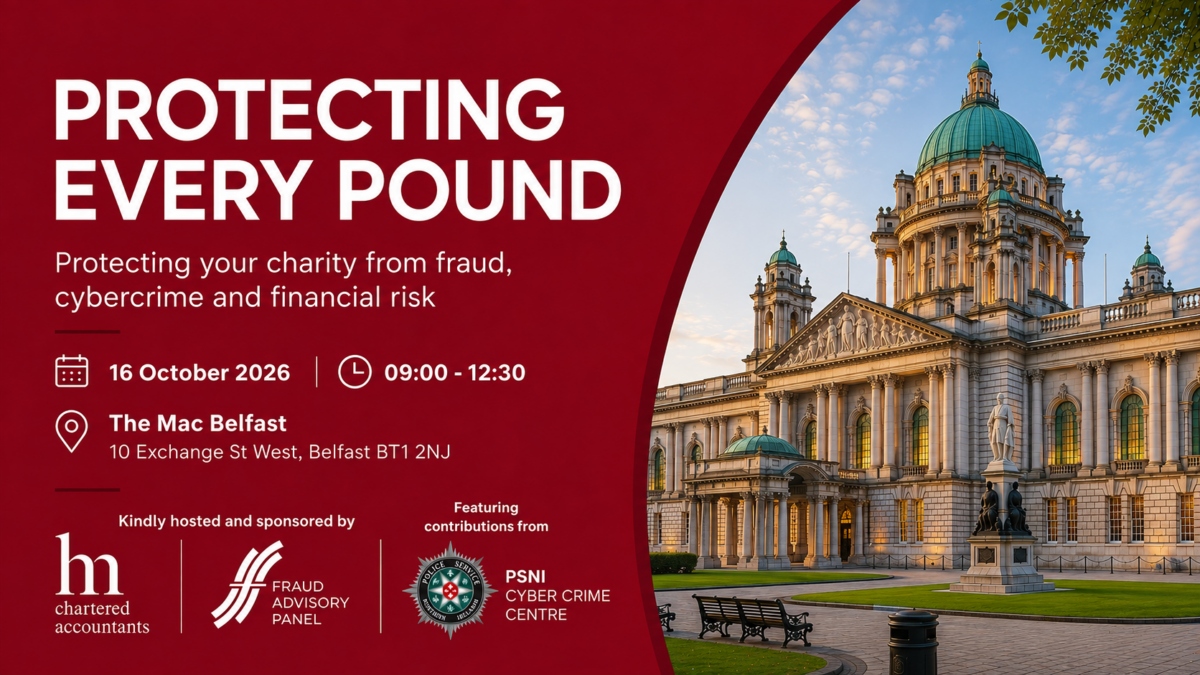
On 16 October 2026 at an event kindly hosted by HM Chartered Accountants, charities from all over Northern Ireland came to join an informative and interactive session hosted at the Mac in Belfast. So much was shared and learned but here are a few take aways from the sessions and sign up to the mailing list to stay up to date on the next events hosted all over the UK and online.
Fraud Advisory Panel
The Panel started the event by giving us a look at the landscape for charities. Unlike commercial organisations, charities are driven by their mission and charitable objectives rather than profit. This creates a unique operating environment, with different pressures, stakeholders and risks. There is no single approach to fraud prevention that will work for every charity. Factors such as organisational size, available resources, donor expectations, charitable purpose, and workforce structure all influence the risks a charity faces and the controls it can realistically implement.
Delegates were encouraged to think about fraud prevention in a practical and proportionate way, recognising that effective controls look different across the sector. The focus should be on understanding the specific risks facing their organisation and building a culture where fraud awareness is part of everyday operations.
Key takeaway: When it comes to fraud, the question is not if it could happen, but when. Preparing for fraud before an incident occurs puts charities in a far stronger position to prevent, detect, and respond effectively when issues arise.
Concern Worldwide
The team at Concern provided a fascinating insight into how a large international charity approaches fraud risk. Central to their philosophy is the belief that fraud should be an expected risk when operating in vulnerable, often remote contexts and actively managed. In fact, an absence of reported fraud can be a cause for concern, as it may indicate that incidents are going undetected or unreported. Charities, donors, and stakeholders should recognise that fraud is an inherent risk that must be addressed, not ignored.
The session explored the wide range of fraud typologies that charities can face. While the methods used by fraudsters continue to evolve, particularly with the emergence of AI and new technologies, one message remained clear throughout: good management is the first line of defence. Strong oversight, effective governance, and a culture of accountability remain critical. Many of the most effective fraud prevention controls are still the basics done well.
The discussion also highlighted the importance of having a clear and well-understood response to fraud. Policies should set out expectations, reporting routes, and actions to be taken when concerns arise. Trustees need to be aware of the key fraud risks facing their organisation and be kept informed when significant incidents or emerging threats arise.
Finally, the team emphasised the importance of organisational ethics. A strong ethical culture, supported by leadership and embedded throughout the charity, can play a vital role in preventing and detecting fraud. When values are clear and consistently applied, they become a powerful safeguard against fraud and misconduct.
Key takeaway: Fraud is a reality for all charities. By combining strong governance, effective management, clear policies, and a robust ethical culture, organisations can be better equipped to prevent, detect, and respond to fraud.
HM Accounting, Trustees conversations
Our hosts for the day, HM Chartered Accountants, delivered two excellent sessions exploring the vital role trustees play in preventing and responding to fraud.
The first session focused on the importance of effective due diligence. Through an interactive exercise examining CVs, delegates were challenged to identify potential red flags and consider the questions they should be asking when recruiting staff and volunteers. A key message throughout was the importance of trusting your instincts and being prepared to challenge information or behaviours that do not seem right.
The second session provided a focused look at the role of trustees within charities. Breaking down trustee responsibilities, the information they should expect to receive at board meetings, and how to ensure resources and funding are being used effectively to deliver charitable objectives. The session also highlighted the value of the Trustee Toolkit, a fantastic resource for anyone looking to better understand their role and responsibilities as a trustee.
Key takeaway: Trustees need a clear understanding of their role, but they also need access to meaningful and accessible information. When charities provide trustees with the right information in a format they can understand and use, they are better equipped to provide effective oversight and challenge, strengthening the organisation’s ability to prevent and respond to fraud.
Police Service of Northern Ireland – Cyber escape room
Closing the day, the PSNI team delivered an interactive cyber escape room, giving delegates the opportunity to put their cybersecurity knowledge to the test. Engaging, informative, and highly entertaining, the session reinforced some key cybersecurity messages that all charities should keep front of mind.
Some of the key takeaways included:
- Don’t overlook the basics. Strong passwords (three random words), multi-factor authentication, and regular staff awareness training remain some of the most effective defences against cybercrime.
- Everyone is a target. Cybercriminals do not discriminate. Whether on personal or professional devices, we are all susceptible to cyber threats, making cybersecurity a responsibility for everyone.
- Create a culture of vigilance. Technology alone cannot prevent every attack. Encouraging staff and volunteers to question unusual requests, report concerns, and speak up when something doesn’t seem right can make a significant difference in preventing cyber incidents.
Key takeaway: While cyber threats continue to evolve, many of the most effective protections come from informed people, strong habits, and a culture where cybersecurity is part of everyday practice.
Conclusion
Thank you to all our speaker who shared their knowledge and to all the charities and delegates that got involved to make this event happen. This event drove home the benefit in charities coming together to network and share what they are seeing. Remember if you work for a charity and you would like to join a closed network of charities, please reach out to Hope Sapey to join the charities against fraud group.
Finally, a huge thank you to HM Chartered Accounting for hosting and sponsoring this event and sharing their knowledge with the delegates.